RPL is available across most of Australia's vocational education and training system. Under the Standards for RTOs 2025, RTOs must offer students the opportunity to seek recognition of their prior learning. Even so, people are sometimes told that RPL is not possible for a course, or that it can only cover part of it. That can be frustrating, especially when you have years of experience. There are usually good reasons, and knowing them can help you plan.
1. The unit requires a demonstration you have to do now
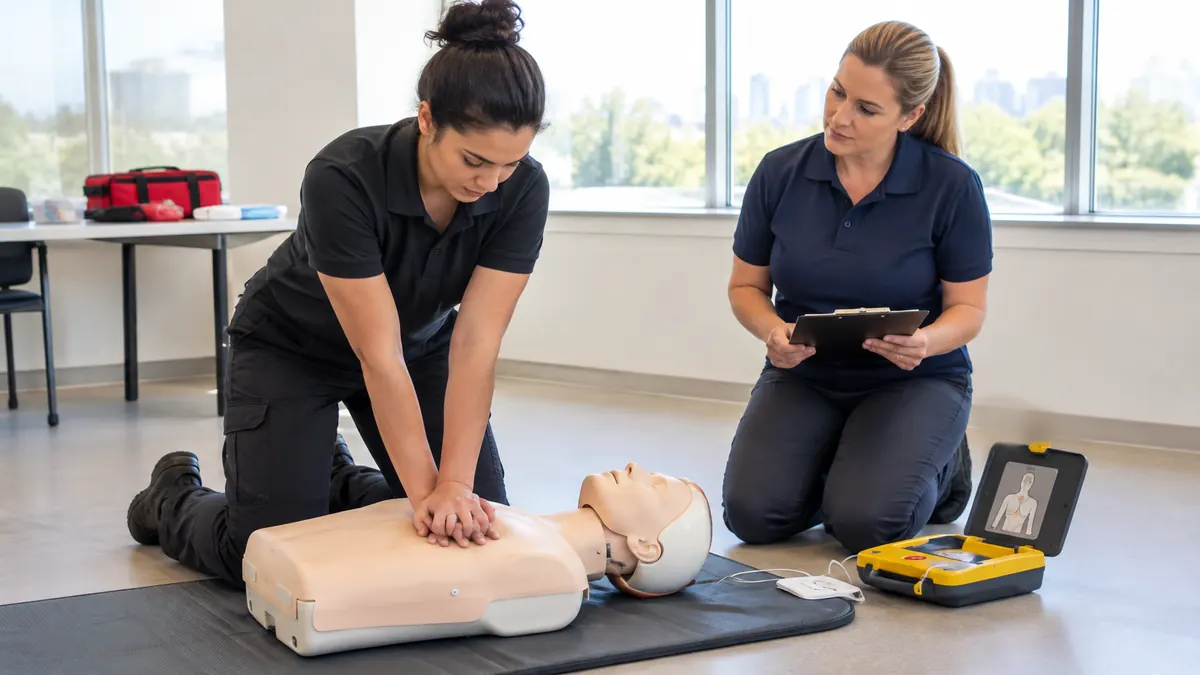
Some units have assessment conditions that require you to demonstrate skills under specific conditions, often in front of an assessor. First aid is a good example. Units such as HLTAID011 Provide First Aid require a practical demonstration, including CPR on a manikin. Years of experience as a nurse or paramedic may help, but you still have to show the skills to an assessor. A folder of past documents cannot replace that.
This is not really a refusal of RPL. It is the unit's assessment requirements doing their job: some skills need to be seen to be judged.
2. A licence or regulator sets extra rules
Where a qualification or unit leads to a licence, a state or territory regulator may add its own requirements. High risk work licences, such as for forklifts, cranes and scaffolding, are assessed against the units of competency for each licence class by assessors approved by the state or territory regulator, and you must pass a formal assessment. Electrical, plumbing, security and some building licences also have their own pathways, and in some cases regulators limit or set conditions on RPL for licence-related units.
If you are aiming for a licence, check with the licensing authority in your state or territory, not only the RTO. Our page on whether RPL is right for you lists some common examples.
3. The qualification has set work placement hours
Some qualifications in community services, health and education include a mandatory number of work placement hours. Examples include the Certificate III in Individual Support and the Certificate III in Early Childhood Education and Care. If you already work in the industry, your current role may meet these requirements, but you will need evidence that matches what the training package specifies.
4. Your evidence is not current enough
The Rules of Evidence require evidence to be current. If you did the work a long time ago and the industry has changed, the RTO may need newer evidence or a practical assessment. This is a common reason for partial RPL outcomes rather than full ones. See our guide to whether your experience is current.
5. The RTO does not have it on scope
An RTO can only assess qualifications that are on its scope of registration. If one provider says it cannot help, it may simply not deliver that qualification. Check training.gov.au for other RTOs that do. Our step-by-step guide to training.gov.au shows how.
6. Some entry and pre-requisite rules still apply
A few qualifications have entry requirements, and some units have pre-requisite units that must be achieved first. RPL can often cover these too, but they still need to be met, and the order can matter.
What to do if you are told no
- Ask exactly which units are affected and why. "RPL is not available" often means "not for these two units".
- Ask what alternatives exist, such as a practical assessment, a workplace observation or a short gap training block.
- Check the licensing authority's rules if a licence is involved.
- If you think an RTO is not offering you the opportunity to seek RPL at all, ask for its recognition policy in writing.
RPL is about recognising genuine competence. The limits exist mainly where safety, licensing or direct observation make a fresh assessment the fairest and safest way to confirm that competence.